
Share Margaret Wolf's obituary with others.
Invite friends and family to read the obituary and add memories.
Stay updated
We'll notify you when service details or new memories are added.
You're now following this obituary
We'll email you when there are updates.
Select your format and elements to print

IN LOVING MEMORY OF Margaret Wolf
Margaret
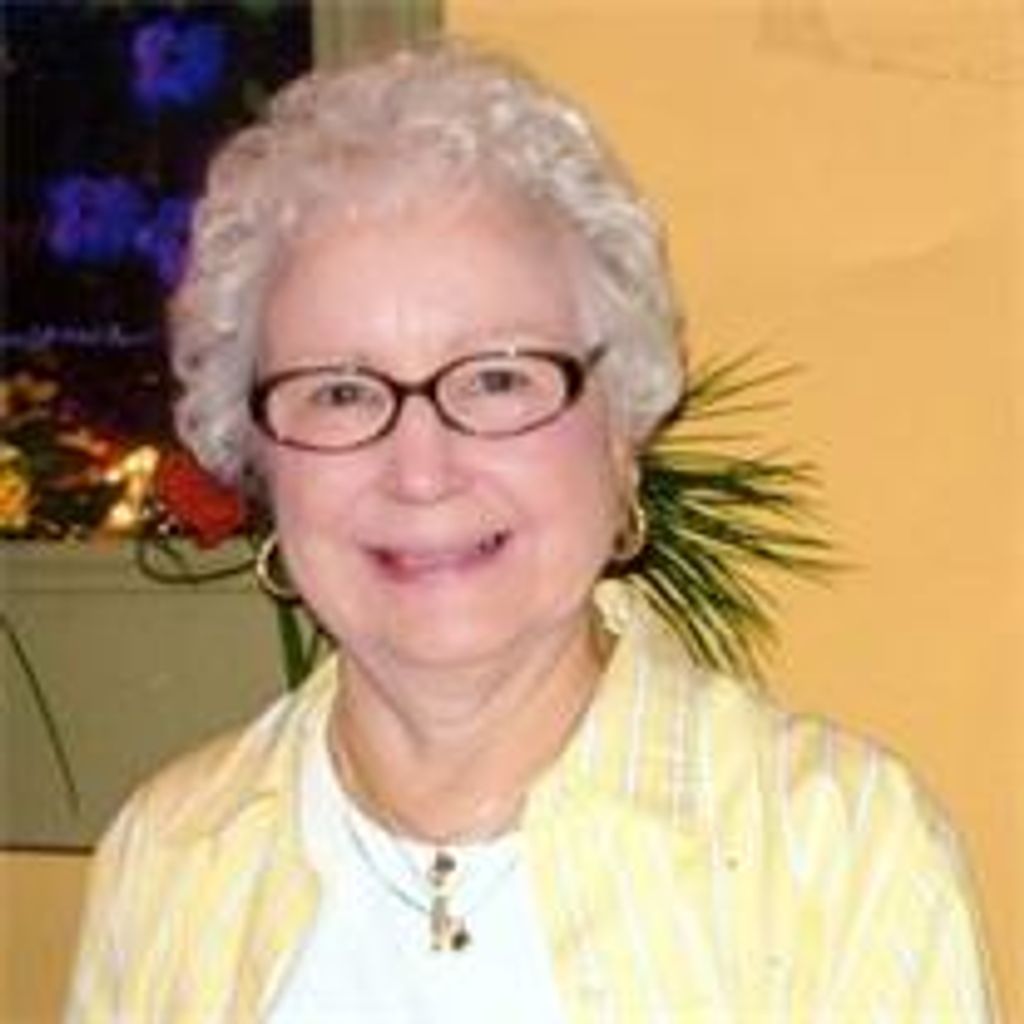
Wolf
Dec 19, 1928 — Dec 19, 2011
Margaret Wolf's Obituary
Margaret McCall Wolf, 83, of Washington, Iowa, died December 19, 2011 at the Washington County Hospital of leukemia.
To celebrate her life, a memorial service will be held at 2:00 p.m. Thursday at the Washington Community Theatre with services conducted by Mike Zahs. Following the service a cast party will be held at Café Dodicis Restaurant from 3:00 until 5:00 p.m. where the family will receive friends. In lieu of flowers memorials have been established for the Washington Community Theater or the Washington Library. The Jones Eden Funeral Home is assisting with arrangements. Online condolences may be sent for Margaret's family through the web at www.jonesfh.com .
Margaret was born on July 1, 1928 the daughter of Glenn and Belle (Jay) McCall on a farm north of West Chester, Iowa. She was a fourth generation McCall. She graduated from Washington High School and later received an Associate of Arts degree from William Woods College in Fulton, Missouri. She was united in marriage to Calvin Wolf on November 4, 1950. At age 67 she graduated from Iowa Wesleyan College in Mount Pleasant, Iowa with her Bachelor of Arts degree.
Margaret was a pillar in her community of Washington, Iowa her entire life. Up until three weeks before her death she was serving on committees that benefited the community. Starting in 1963 she was the lead costumer at the Washington Community Theater for such musical productions as Music Man, My Fair Lady, South Pacific, and Fiddler on the Roof. She was also a board member and membership chair at the United Presbyterian Home for many years and was a past president of the YWCA. She worked as a teacher's associate for 10 years at Lincoln Elementary School. In 1976 Margaret was named Mother of the Year by the Fortnightly Club. She was the Christian Education Counselor at the United Presbyterian Church for eight years and also served as an elder. She was a member of PEO and in 2008 she received the Bill Sitler/Rotary Community Service award and in 2008 received the Chamber of Commerce Citizen of the Year. She was a patron of the Washington Library.
She endured a 3 month stay at the University of Iowa in 2010 and later wrote an article entitled "A Country Called Cancer". Nursing students at Grand View University study this article every semester to gain a sense of what occurs, from a patient's perspective, when undergoing treatment for cancer.
She is survived by her loving husband of 61 years, Calvin Wolf, daughter Jean Logan and husband Tom of Des Moines, Iowa; son John Wolf of Bellevue, Nebraska; granddaughter Abigail Logan of Seattle, Washington; and Grandson Grant Logan of Des Moines, Iowa. Many people considered her to be their second mother.
She was preceded in death by her father Glenn McCall, her first mother Belle McCall, her second mother Mildred McCall, her brother David McCall, her infant brother J.A. McCall, and her sister Elizabeth McCall.
A COUNTRY CALLED CANCER by Margaret Wolf
After almost two years of living with a low blood platelet count, I was diagnosed in February, 2010 with Acute Myeloid Leukemia. It was news that would forever change my view of life and community and news that would take me away from the familiar into another place. I call this other place, "A Country called Cancer". The setting was the University of Iowa Hospitals and Clinics and here I would be asked to step across a border and put myself into strangers' hands. As a result, I would need to trade control of my body for a planned treatment.
This reminded me of the account in Numbers of Moses standing on the banks of the river Jordan and looking across at the Promised Land – what would be found? Would it be milk and honey or giants? After 80+ years of excellent health, what would I find? But unlike Moses who sent a substitute, I needed to go myself – once I made the decision to go, there would be no turning back. I stepped across.
The Country is governed by white coated officials who speak in tongues. Interpretations are available from PAs and nurses, who are usually in two piece green outfits and step forward to answer your questions. Your passport to this strange land is not the usual booklet, complete with a questionable photo and your address, but a white band, wore on your wrist which tells your name, dob (date of birth), F for female and has a bar code. You must memorize your name and dob because nothing happens, no meds given, etc. unless you get it right. They never asked me F for female – I guess they could tell. I soon learned that the bar code is very important. Most all of treatment is documented by computer and that is where the bar code comes into play. It is zapped before they will administer much of anything and it is your job to keep it handy.
Early in your stay, if you were to become part of this system, the doctor would probably ask you questions like "Do you want any heroics?" And "Have you made provision for your body?" "Do you have a Durable Power of Attorney and a Living Will?" Upon reflection, I acknowledge these questions are necessary even if they seem ill timed when you have come to this place with the expectation of returning to health and a vigorous life style. At this point a certain amount of anxiety can and did creep in.
Accommodations vary, are usually tight but quite adequate. There are no trees in this land but strange substitutes that look like overgrown chrome hall trees. They are everywhere and usually attached to a patient with varying lengths of tubing. Instead of hats and coats on the usual hall tree, they seem to be a catch all for all kinds of strange looking plastic bags full of liquid, stethoscopes, scissors, rolls of tape, etc. I soon had my own and I named her Petunia. We bonded.
Petunia went
continued...
1
2
3
Next
...continued
everywhere with me at all times of the day and night – She rolled along quite nicely on her 5 chrome wheels when I went to the bathroom, or for a walk but sat quietly when I went to bed. She did annoy me with her whining, though, when the tubing was blocked.
I lived on two floors at the University Hospital, for over 2 months the 4th and the 7th. The 4th is where I received the first round of my treatment of chemo but I did not stay on that floor very long. The nurses there saved my life. The 7th is a close knit part of the hospital designated as the Leukemia treatment and bone marrow floor. It proved to be the place I was assigned to for the longest period and was where I flourished as treatment continued. My room was small but intimate and reminded me of an early Super 8 motel. As I lived there, it became apparent why - my immune system was flat so the lack of curtains, carpeting and upholstered furniture assured I would not be subjected to mold and dust. Even flowers were kept at the Nurses' Station. The hard surfaces could easily be disinfected by the housekeepers who carefully moved in and out of the room daily.
After the third day of treatment I had to wear a mask when walking with Petunia in the halls. I understood this was because my immune system was wiped out and I could easily pick up a bad infection.
You need to learn a new vocabulary to live in this country: "Pee" means urinate and it is alright to use the term even if your grandmother washed you mouth out with soap for saying it when you were five. This is considered one of the major bodily functions and its output is carefully measured and analyzed. Hats are not items worn on the head – they appear in toilets and are used as the measuring tools for amount and appearance. What the output in the hat is and how it rates as to color and clarity is important. Is it clear or cloudy? BMs are also high on the list and can be analyzed as having an "applesauce, pudding or formed" appearance. While this is not the usual bridge table conversation, it is a part of being a citizen of this new land. All of this is carefully charted.
Charting is the life blood of a patient's stay – it records the meds prescribed, the dosage, vitals, a patient's response to treatment, etc. This becomes the permanent part of the records and can be accessed easily. Speaking of vitals, they include blood pressure, temperature and respiratory rate, also heart and lungs function. At the peak of your stay, vitals are taken every two hours day and night, whether you are asleep or not.
Another vocabulary word used frequently on the 7th floor is "butt check". The term is commonly referred to in the industry as a bone marrow biopsy and is used to determine the status of leukemia. This was the final procedure in my stay on 7th and was done gleefully but with great caring and professionalism by my PA. It has since been a
determining voice in my treatment and I am grateful for the skill and training I found on that floor.
While the "Butt Check" was a closing procedure, a beginning one was insertion of a Picc line (Peripherally inserted central catheter) which provides for intravenous access for prolonged periods. It was another vocabulary learning experience. "Flush" does not mean the bathroom toilet – when in U of I Hospitals, it usually refers to what they do to your Picc line. To keep these active so to access the drawing of blood and the transfusing of blood products, they are flushed with either heparin or saline on a regular basis. They are quite comfortable and eliminate the use of needles. I thought this was a dandy idea!
My chemo treatments began in February with questionable results - the 3x7 chemo shut down my respiratory system (This is where my nurse on 4th recognized my distress and made sure I got help.) The sores in my throat were so bad that they closed off my wind pipe. They could not get a breathing tube down through my throat so they had to get a trach kit and put the breathing tube straight into the base of my neck (My daughter told me this—I didn't remember, thank goodness). This procedure necessitated a time after surgery in intensive care for close monitoring. While there my mind decided I could float back and forth to my home at 20 Locust Lane which I did often.
My mind also told me someone was having a big party across the hall and hadn't invited me – they were quite noisy and I was miffed. I returned to the IC when the trach bled and a third time for a seizure which happened on March 6. The cause of the seizure was not determined. I have almost no recall of all of this. My first coherent recollection was being back in my room on 7th and a bevy of nurses were washing me. I remember feeling so comforted and their voices so reassuring.
The trach was not a common appliance for a patient to have on the 7th floor so in some cases care of it was a learning experience for everyone. It was a foreign object in cancer country that needed to be poked and studied by all. It also shut down any verbal conversation between the nurses or visitors and me.
I resorted to a piece of paper and a ball point pen for communication and it was marginally successful – complaints ranged from "I can't read your writing" to "You write too small." The trach remained in place until I could pass the swallowing test which consisted of chugging down a suspicious looking liquid and keeping it
continued...
Previous
1
2
3
Next
...continued
down. After some success with this test, the surgeons came in and removed the trach. What it left was a round hole in my throat which tooted out air when I coughed or said certain words. It is now several weeks since the trach was removed and much of the hole remains but the tooting is gone. The doctors watch it carefully for infection. For the next weeks, it was my job to partner with treatment to get better and regain some of the strength I had brought with me on that first day. In physical therapy, Melanie and her students challenged me to stretch myself and relearn how to walk and do stairs. Sue from activities entertained me with Bingo and movies, Deb, my PA was a constant source of caring, information and challenges – her favorite was "Have you drunk enough water today?" and Jana, the social worker was starting to think about the time I could go home.
The nurses were incredible – how can a list be made of the efforts they make every shift to see their patients thrive. I shall try!
I had fallen, which is a no-no for any patient so the nurses tagged my room with falling leaves. This is the universal signal for a fall and consequently I was restricted to any movement out of bed without their help. The bed even had bells that rang if my feet touched the floor. This, of course, meant, they were on call often and they never complained. At the time of the fall, which resulted in a head injury, I was immediately sent for a head x ray to determine if there was internal bleeding. I escaped that possibility.
They wrapped my Picc with saran wrap so I could take a shower and they saw me through the worst case of diarrhea imaginable. The message they sent was, "We're in this together and we are going to see you get better."
Dietary had an important role in this ongoing care. They monitored my food choices and made suggestions. During all of my treatment and the time my respiratory system was compromised, I was fed a milky liquid nutrition called total parental nutrition (TPN) through the Picc line. There was nothing by mouth and I felt no hunger. But the day came when they decided I should order food off the hospital menu. It was then I learned that there usually is a two week period when chemo has taken over your taste buds and your mouth refuses food.
By then my hair was gone but Diane, a nursing assistance produced a box of great knitted hats – these are made by a person who must know what baldness can do to a woman's self-esteem and donated them to the 7th floor. I never have one on that someone doesn't comment on it. They say "I like your hat." And I say "Thanks. I do too!'
On one of my last days at the University I had a front row seat for President Barack Obama's visit to the Fieldhouse, only from the back. From my hospital room I got to watch the sharp shooters climb onto the roofs and position themselves to assure the president's safety. I got to see the white tents assembled that would shield the motorcade. And I listened and saw the president on TV talk about the new Health Care Reform bill. I reflected about the wonderful health care I was receiving because of Medicare and was thankful that others would now be able to get the kind of treatment I had received.
I did go back to Washington for a few days only to develop an infection from the Picc line and a rash from a mysterious source. Back I went to 7th floor – I was even assigned my old room – it was like a homecoming. The Picc line was pulled and another was inserted – antibiotics and antifungals were started through the newly inserted line and the rash turned from small red dots over my body to an over-all redness, the color of Christmas. Dermatology did a biopsy to determine the source of the rash. After a week or so I ended up in skilled care at the Washington County Hospital until the infection was under control.
From the beginning and without hesitation, I promised myself to be in a trustful relationship with my doctors, the PAs and the nurses. I was never disappointed. I found each of them to be dedicated and hard working. What more could I ask in this strange land called "Cancer"? It had proved to be a very scary journey and one I would not like to take again.
But I needed to go home – to that other place where I was forever changed. I had experienced the constant love and care of a family which sustained me, the concern of a community which expressed this concern in so many ways and an appreciation for the many prayers lifted on my behalf. I now belonged to two lands – I had earned dual citizenship.
Previous
1
2
3
To celebrate her life, a memorial service will be held at 2:00 p.m. Thursday at the Washington Community Theatre with services conducted by Mike Zahs. Following the service a cast party will be held at Café Dodicis Restaurant from 3:00 until 5:00 p.m. where the family will receive friends. In lieu of flowers memorials have been established for the Washington Community Theater or the Washington Library. The Jones Eden Funeral Home is assisting with arrangements. Online condolences may be sent for Margaret's family through the web at www.jonesfh.com .
Margaret was born on July 1, 1928 the daughter of Glenn and Belle (Jay) McCall on a farm north of West Chester, Iowa. She was a fourth generation McCall. She graduated from Washington High School and later received an Associate of Arts degree from William Woods College in Fulton, Missouri. She was united in marriage to Calvin Wolf on November 4, 1950. At age 67 she graduated from Iowa Wesleyan College in Mount Pleasant, Iowa with her Bachelor of Arts degree.
Margaret was a pillar in her community of Washington, Iowa her entire life. Up until three weeks before her death she was serving on committees that benefited the community. Starting in 1963 she was the lead costumer at the Washington Community Theater for such musical productions as Music Man, My Fair Lady, South Pacific, and Fiddler on the Roof. She was also a board member and membership chair at the United Presbyterian Home for many years and was a past president of the YWCA. She worked as a teacher's associate for 10 years at Lincoln Elementary School. In 1976 Margaret was named Mother of the Year by the Fortnightly Club. She was the Christian Education Counselor at the United Presbyterian Church for eight years and also served as an elder. She was a member of PEO and in 2008 she received the Bill Sitler/Rotary Community Service award and in 2008 received the Chamber of Commerce Citizen of the Year. She was a patron of the Washington Library.
She endured a 3 month stay at the University of Iowa in 2010 and later wrote an article entitled "A Country Called Cancer". Nursing students at Grand View University study this article every semester to gain a sense of what occurs, from a patient's perspective, when undergoing treatment for cancer.
She is survived by her loving husband of 61 years, Calvin Wolf, daughter Jean Logan and husband Tom of Des Moines, Iowa; son John Wolf of Bellevue, Nebraska; granddaughter Abigail Logan of Seattle, Washington; and Grandson Grant Logan of Des Moines, Iowa. Many people considered her to be their second mother.
She was preceded in death by her father Glenn McCall, her first mother Belle McCall, her second mother Mildred McCall, her brother David McCall, her infant brother J.A. McCall, and her sister Elizabeth McCall.
A COUNTRY CALLED CANCER by Margaret Wolf
After almost two years of living with a low blood platelet count, I was diagnosed in February, 2010 with Acute Myeloid Leukemia. It was news that would forever change my view of life and community and news that would take me away from the familiar into another place. I call this other place, "A Country called Cancer". The setting was the University of Iowa Hospitals and Clinics and here I would be asked to step across a border and put myself into strangers' hands. As a result, I would need to trade control of my body for a planned treatment.
This reminded me of the account in Numbers of Moses standing on the banks of the river Jordan and looking across at the Promised Land – what would be found? Would it be milk and honey or giants? After 80+ years of excellent health, what would I find? But unlike Moses who sent a substitute, I needed to go myself – once I made the decision to go, there would be no turning back. I stepped across.
The Country is governed by white coated officials who speak in tongues. Interpretations are available from PAs and nurses, who are usually in two piece green outfits and step forward to answer your questions. Your passport to this strange land is not the usual booklet, complete with a questionable photo and your address, but a white band, wore on your wrist which tells your name, dob (date of birth), F for female and has a bar code. You must memorize your name and dob because nothing happens, no meds given, etc. unless you get it right. They never asked me F for female – I guess they could tell. I soon learned that the bar code is very important. Most all of treatment is documented by computer and that is where the bar code comes into play. It is zapped before they will administer much of anything and it is your job to keep it handy.
Early in your stay, if you were to become part of this system, the doctor would probably ask you questions like "Do you want any heroics?" And "Have you made provision for your body?" "Do you have a Durable Power of Attorney and a Living Will?" Upon reflection, I acknowledge these questions are necessary even if they seem ill timed when you have come to this place with the expectation of returning to health and a vigorous life style. At this point a certain amount of anxiety can and did creep in.
Accommodations vary, are usually tight but quite adequate. There are no trees in this land but strange substitutes that look like overgrown chrome hall trees. They are everywhere and usually attached to a patient with varying lengths of tubing. Instead of hats and coats on the usual hall tree, they seem to be a catch all for all kinds of strange looking plastic bags full of liquid, stethoscopes, scissors, rolls of tape, etc. I soon had my own and I named her Petunia. We bonded.
Petunia went
continued...
1
2
3
Next
...continued
everywhere with me at all times of the day and night – She rolled along quite nicely on her 5 chrome wheels when I went to the bathroom, or for a walk but sat quietly when I went to bed. She did annoy me with her whining, though, when the tubing was blocked.
I lived on two floors at the University Hospital, for over 2 months the 4th and the 7th. The 4th is where I received the first round of my treatment of chemo but I did not stay on that floor very long. The nurses there saved my life. The 7th is a close knit part of the hospital designated as the Leukemia treatment and bone marrow floor. It proved to be the place I was assigned to for the longest period and was where I flourished as treatment continued. My room was small but intimate and reminded me of an early Super 8 motel. As I lived there, it became apparent why - my immune system was flat so the lack of curtains, carpeting and upholstered furniture assured I would not be subjected to mold and dust. Even flowers were kept at the Nurses' Station. The hard surfaces could easily be disinfected by the housekeepers who carefully moved in and out of the room daily.
After the third day of treatment I had to wear a mask when walking with Petunia in the halls. I understood this was because my immune system was wiped out and I could easily pick up a bad infection.
You need to learn a new vocabulary to live in this country: "Pee" means urinate and it is alright to use the term even if your grandmother washed you mouth out with soap for saying it when you were five. This is considered one of the major bodily functions and its output is carefully measured and analyzed. Hats are not items worn on the head – they appear in toilets and are used as the measuring tools for amount and appearance. What the output in the hat is and how it rates as to color and clarity is important. Is it clear or cloudy? BMs are also high on the list and can be analyzed as having an "applesauce, pudding or formed" appearance. While this is not the usual bridge table conversation, it is a part of being a citizen of this new land. All of this is carefully charted.
Charting is the life blood of a patient's stay – it records the meds prescribed, the dosage, vitals, a patient's response to treatment, etc. This becomes the permanent part of the records and can be accessed easily. Speaking of vitals, they include blood pressure, temperature and respiratory rate, also heart and lungs function. At the peak of your stay, vitals are taken every two hours day and night, whether you are asleep or not.
Another vocabulary word used frequently on the 7th floor is "butt check". The term is commonly referred to in the industry as a bone marrow biopsy and is used to determine the status of leukemia. This was the final procedure in my stay on 7th and was done gleefully but with great caring and professionalism by my PA. It has since been a
determining voice in my treatment and I am grateful for the skill and training I found on that floor.
While the "Butt Check" was a closing procedure, a beginning one was insertion of a Picc line (Peripherally inserted central catheter) which provides for intravenous access for prolonged periods. It was another vocabulary learning experience. "Flush" does not mean the bathroom toilet – when in U of I Hospitals, it usually refers to what they do to your Picc line. To keep these active so to access the drawing of blood and the transfusing of blood products, they are flushed with either heparin or saline on a regular basis. They are quite comfortable and eliminate the use of needles. I thought this was a dandy idea!
My chemo treatments began in February with questionable results - the 3x7 chemo shut down my respiratory system (This is where my nurse on 4th recognized my distress and made sure I got help.) The sores in my throat were so bad that they closed off my wind pipe. They could not get a breathing tube down through my throat so they had to get a trach kit and put the breathing tube straight into the base of my neck (My daughter told me this—I didn't remember, thank goodness). This procedure necessitated a time after surgery in intensive care for close monitoring. While there my mind decided I could float back and forth to my home at 20 Locust Lane which I did often.
My mind also told me someone was having a big party across the hall and hadn't invited me – they were quite noisy and I was miffed. I returned to the IC when the trach bled and a third time for a seizure which happened on March 6. The cause of the seizure was not determined. I have almost no recall of all of this. My first coherent recollection was being back in my room on 7th and a bevy of nurses were washing me. I remember feeling so comforted and their voices so reassuring.
The trach was not a common appliance for a patient to have on the 7th floor so in some cases care of it was a learning experience for everyone. It was a foreign object in cancer country that needed to be poked and studied by all. It also shut down any verbal conversation between the nurses or visitors and me.
I resorted to a piece of paper and a ball point pen for communication and it was marginally successful – complaints ranged from "I can't read your writing" to "You write too small." The trach remained in place until I could pass the swallowing test which consisted of chugging down a suspicious looking liquid and keeping it
continued...
Previous
1
2
3
Next
...continued
down. After some success with this test, the surgeons came in and removed the trach. What it left was a round hole in my throat which tooted out air when I coughed or said certain words. It is now several weeks since the trach was removed and much of the hole remains but the tooting is gone. The doctors watch it carefully for infection. For the next weeks, it was my job to partner with treatment to get better and regain some of the strength I had brought with me on that first day. In physical therapy, Melanie and her students challenged me to stretch myself and relearn how to walk and do stairs. Sue from activities entertained me with Bingo and movies, Deb, my PA was a constant source of caring, information and challenges – her favorite was "Have you drunk enough water today?" and Jana, the social worker was starting to think about the time I could go home.
The nurses were incredible – how can a list be made of the efforts they make every shift to see their patients thrive. I shall try!
I had fallen, which is a no-no for any patient so the nurses tagged my room with falling leaves. This is the universal signal for a fall and consequently I was restricted to any movement out of bed without their help. The bed even had bells that rang if my feet touched the floor. This, of course, meant, they were on call often and they never complained. At the time of the fall, which resulted in a head injury, I was immediately sent for a head x ray to determine if there was internal bleeding. I escaped that possibility.
They wrapped my Picc with saran wrap so I could take a shower and they saw me through the worst case of diarrhea imaginable. The message they sent was, "We're in this together and we are going to see you get better."
Dietary had an important role in this ongoing care. They monitored my food choices and made suggestions. During all of my treatment and the time my respiratory system was compromised, I was fed a milky liquid nutrition called total parental nutrition (TPN) through the Picc line. There was nothing by mouth and I felt no hunger. But the day came when they decided I should order food off the hospital menu. It was then I learned that there usually is a two week period when chemo has taken over your taste buds and your mouth refuses food.
By then my hair was gone but Diane, a nursing assistance produced a box of great knitted hats – these are made by a person who must know what baldness can do to a woman's self-esteem and donated them to the 7th floor. I never have one on that someone doesn't comment on it. They say "I like your hat." And I say "Thanks. I do too!'
On one of my last days at the University I had a front row seat for President Barack Obama's visit to the Fieldhouse, only from the back. From my hospital room I got to watch the sharp shooters climb onto the roofs and position themselves to assure the president's safety. I got to see the white tents assembled that would shield the motorcade. And I listened and saw the president on TV talk about the new Health Care Reform bill. I reflected about the wonderful health care I was receiving because of Medicare and was thankful that others would now be able to get the kind of treatment I had received.
I did go back to Washington for a few days only to develop an infection from the Picc line and a rash from a mysterious source. Back I went to 7th floor – I was even assigned my old room – it was like a homecoming. The Picc line was pulled and another was inserted – antibiotics and antifungals were started through the newly inserted line and the rash turned from small red dots over my body to an over-all redness, the color of Christmas. Dermatology did a biopsy to determine the source of the rash. After a week or so I ended up in skilled care at the Washington County Hospital until the infection was under control.
From the beginning and without hesitation, I promised myself to be in a trustful relationship with my doctors, the PAs and the nurses. I was never disappointed. I found each of them to be dedicated and hard working. What more could I ask in this strange land called "Cancer"? It had proved to be a very scary journey and one I would not like to take again.
But I needed to go home – to that other place where I was forever changed. I had experienced the constant love and care of a family which sustained me, the concern of a community which expressed this concern in so many ways and an appreciation for the many prayers lifted on my behalf. I now belonged to two lands – I had earned dual citizenship.
Previous
1
2
3
To send flowers with our preferred florist or plant a memorial tree, please visit our flower store.
Funeral Services for Margaret Wolf
Memorial Service

December
22
Thursday
Washington Community Theater
Starts at 2:00 pm
Margaret Wolf's Guestbook
Visits: 36
This site is protected by reCAPTCHA and the
Google Privacy Policy and Terms of Service apply.
Service map data © OpenStreetMap contributors